What Poor Sleep May Be Telling You About Your Health
Short sleep, long naps, and loud snoring are easy to dismiss. Research suggests they may be early warnings for stroke worth paying attention to.

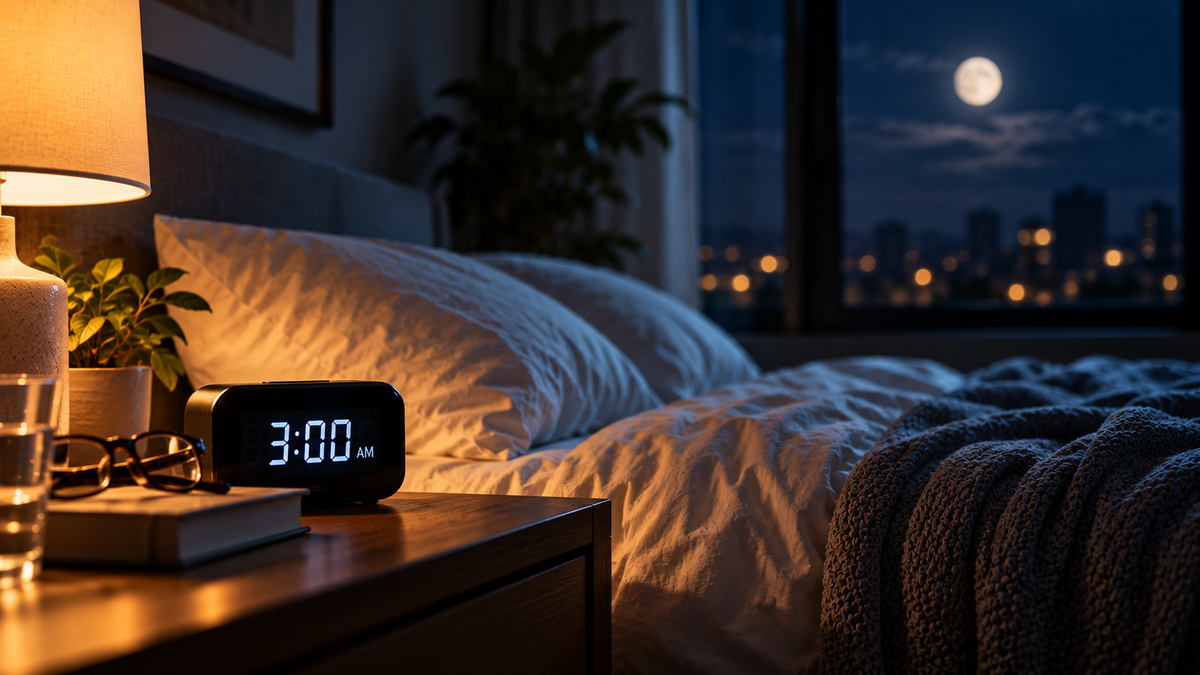
Most of us treat a bad night of sleep as an inconvenience. We reach for another cup of coffee, push through the afternoon, and promise ourselves an early night. When the bad nights stack up into weeks and months, we call it stress, or age, or just the way things are.
But sleep is not only about how rested we feel. A growing body of research suggests that the way we sleep may be one of the quieter signals of what is happening in our heart, our blood vessels, and our brain. When it comes to stroke, the patterns that show up at night can be an early warning worth paying attention to.
What the Research Shows
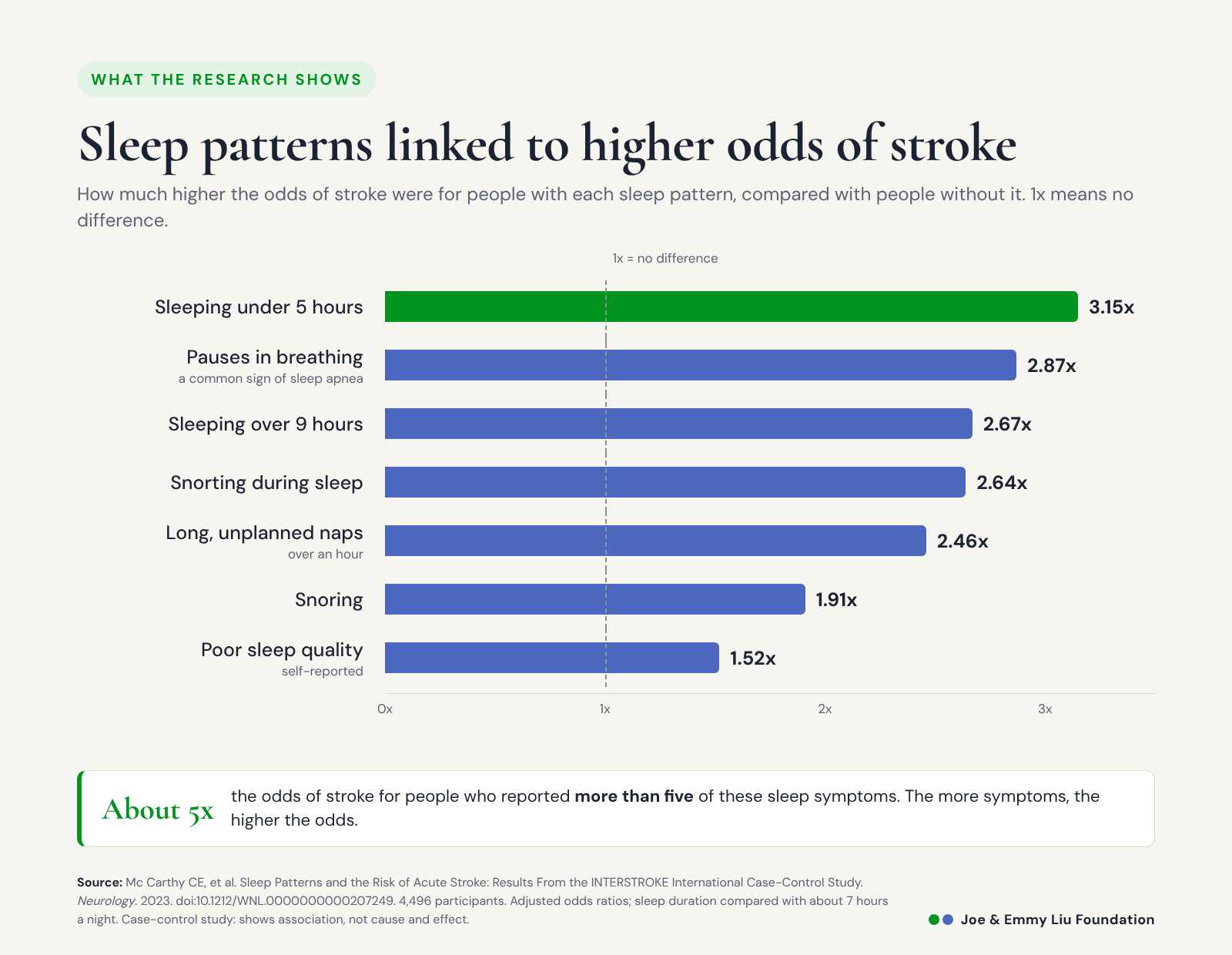
In 2023, the international INTERSTROKE study, published in the journal Neurology, compared the sleep habits of nearly 4,500 people, including more than 2,000 who had experienced a stroke. Several patterns stood out:
- People who slept fewer than five hours a night were about three times as likely to have had a stroke as people who slept around seven hours.
- People who regularly slept more than nine hours also had higher odds, at roughly two and a half times.
- Long, unplanned daytime naps were linked to higher stroke odds. Short or planned naps were not.
- Snoring was linked to nearly double the odds, and pauses in breathing during sleep, a common sign of sleep apnea, to nearly three times the odds.
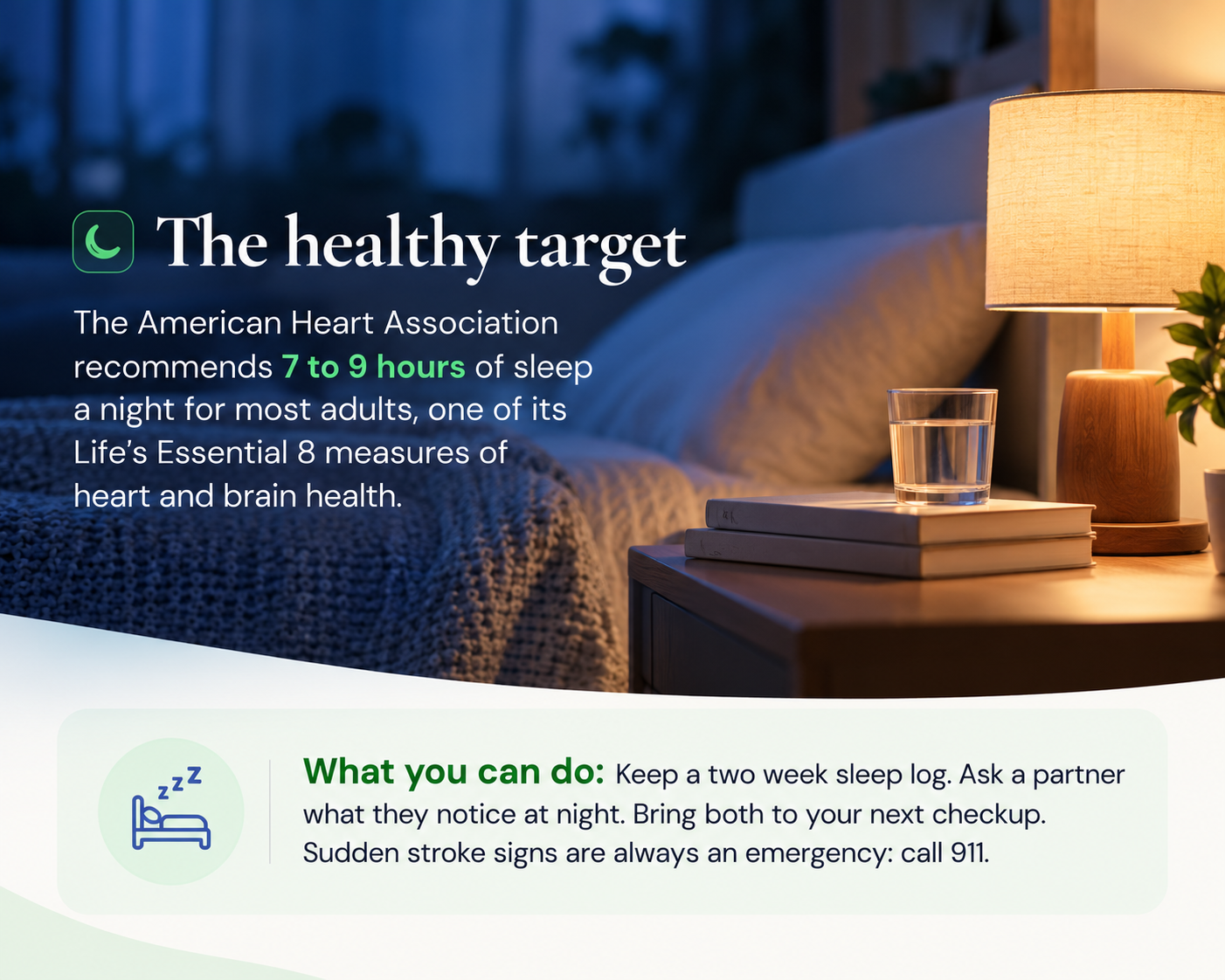
Other research points in the same direction. The Sleep Heart Health Study, supported by the National Heart, Lung, and Blood Institute, found that men with moderate to severe obstructive sleep apnea were nearly three times as likely to have a stroke as men without it. And in 2022, the American Heart Association added sleep to its Life's Essential 8, the core measures it uses to describe heart and brain health, recommending 7 to 9 hours a night for most adults.
These studies show associations, not proof that poor sleep directly causes stroke. Taken together, though, they make a strong case that sleep belongs in every conversation about prevention.
The Signs That Are Easy to Dismiss
Sleep problems rarely announce themselves. The person sleeping is often the last to know. It is usually a spouse who hears the snoring stop and start again with a gasp, or an adult child who notices a parent dozing off every afternoon and assumes it is just part of getting older.
These are some of the patterns worth noticing:
- Loud, regular snoring, especially with snorting or gasping
- Pauses in breathing that someone else observes
- Consistently sleeping fewer than five hours, or more than nine
- Long, unplanned naps during the day
- Waking up unrefreshed, with morning headaches or daytime fog
None of these means a stroke is coming. They are signals, and signals are most useful when someone notices them, tracks them, and brings them up with a doctor.
Why Noticing Early Matters
A stroke can feel sudden, but risk often builds slowly, through changes in blood pressure, breathing, and circulation that repeat night after night. Sleep is one of the few windows where those changes can show up early, long before a crisis.
Acting on that window does not have to be complicated:
- Keep a simple sleep log for two weeks: bedtime, wake time, naps, and how rested you feel.
- Ask the people around you. A partner or family member may have noticed snoring or breathing pauses you have not.
- Bring it to your next checkup. Sleep is easy to leave off the list, but it is a fair question to ask your doctor about.
Paying attention early is how families avoid the emergency room visit, the long recovery, and the costly reactive care that so often follows a missed warning.
And remember the signs of a stroke in progress, often summarized as BE FAST: Balance loss, Eye or vision changes, Face drooping, Arm weakness, Speech difficulty, Time to call 911. A stroke is always an emergency.

The Foundation's Role in Closing the Gap
The Joe & Emmy Liu Foundation exists to help people recognize early warnings before they become emergencies. We provide free, proactive health education so individuals and families can understand the signals their bodies send and act while their options are still open. We do not give medical advice, and we do not sell products. If anything in this article sounds familiar, talk with your doctor. And if you want more education like this, join our community and subscribe to our newsletter.
👉 Click here to join our community
Live Proactively. Early Warnings. Reduce Spending. Save Lives.
Sources
- Mc Carthy CE, Yusuf S, Judge C, et al. Sleep Patterns and the Risk of Acute Stroke: Results From the INTERSTROKE International Case-Control Study. Neurology. 2023;100(21):e2191-e2203. doi:10.1212/WNL.0000000000207249
- Redline S, Yenokyan G, Gottlieb DJ, et al. Obstructive Sleep Apnea-Hypopnea and Incident Stroke: The Sleep Heart Health Study. American Journal of Respiratory and Critical Care Medicine. 2010;182(2):269-277. doi:10.1164/rccm.200911-1746OC
- Lloyd-Jones DM, Allen NB, Anderson CAM, et al. Life's Essential 8: Updating and Enhancing the American Heart Association's Construct of Cardiovascular Health. Circulation. 2022;146(5):e18-e43. doi:10.1161/CIR.0000000000001078
Figures are adjusted odds ratios from a case-control study and show association, not cause and effect. This article is for education only and is not medical advice.